
Video Remote Interpreting Services at Airports
Enhancing Accessibility, Passenger Experience, and Airline Revenue
Airports are complex, fast-moving environments where effective communication is essential. For deaf and hard-of-hearing (DHH) travelers, navigating an airport can present significant communication challenges—from checking in and going through security to boarding a flight, responding to announcements, handling delays, and managing emergencies.
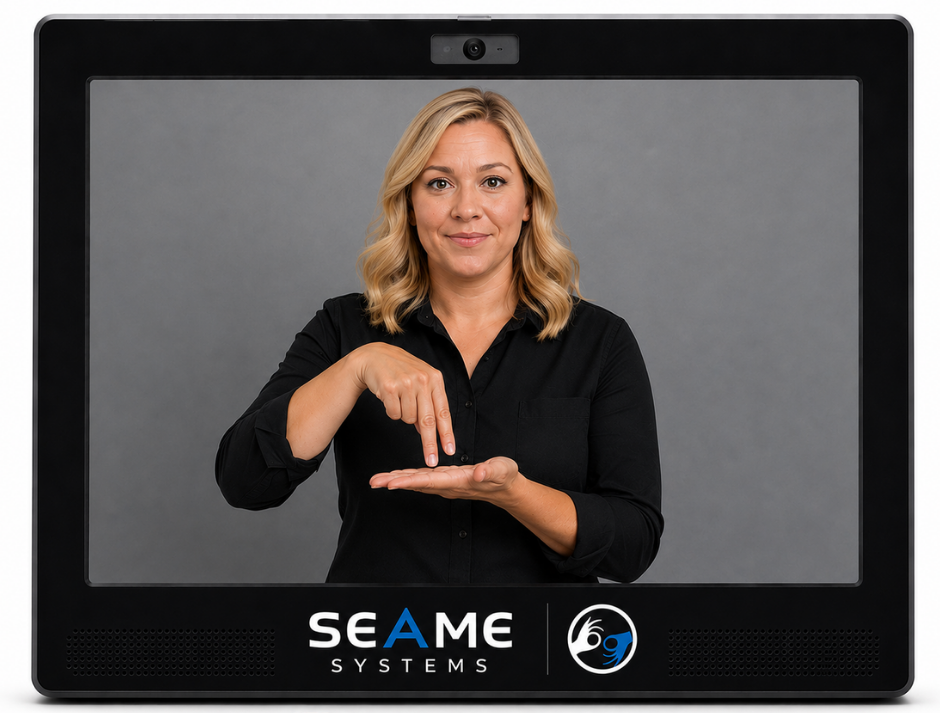
Video Remote Interpreting (VRI) provides airports and airlines with an on-demand communication solution that connects DHH passengers and airport personnel with qualified interpreters through video. Strategically placed VRI kiosks or video-enabled devices can provide real-time communication at key passenger touchpoints without requiring a physical interpreter to be stationed at every location.
Challenges Deaf and Hard-of-Hearing Guests
Experience at Airports
VRI can help airports and airlines create a more inclusive passenger experience while potentially strengthening customer loyalty, increasing repeat travel, and expanding access to the DHH travel market.
Check-In and Ticketing
Airline check-in frequently involves verbal communication about:
- Flight reservations
- Identification requirements
- Baggage
- Seat assignments
- Boarding procedures
- Travel restrictions
- Flight changes
When communication is not accessible, passengers may experience delays, misunderstandings, or frustration.
Boarding Announcements
Airports and airlines rely heavily on audible announcements to communicate gate changes, boarding groups, delays, cancellations, and other important information.
A DHH passenger may miss an announcement if visual information is unavailable, unclear, delayed, or difficult to locate.
This can create significant problems, including missed boarding opportunities and unnecessary stress.
Security Screening
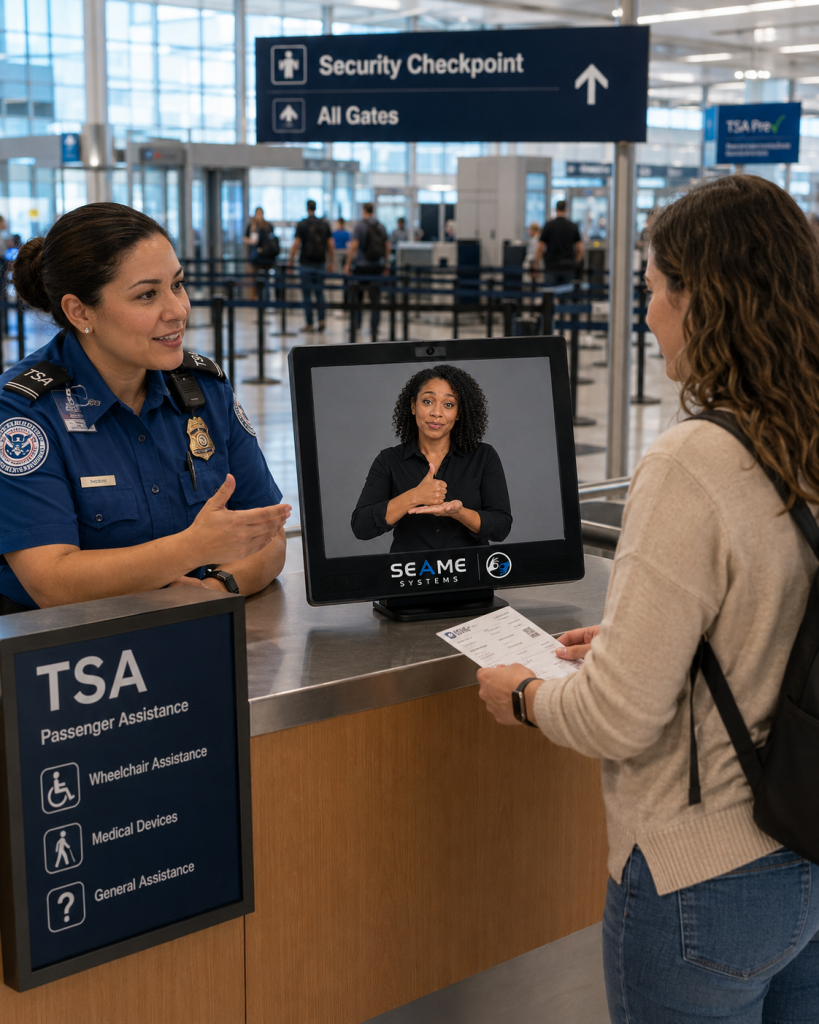
Transportation security procedures can require rapid communication between passengers and security personnel.
For DHH travelers, communicating instructions or responding to questions can become difficult when personnel and passengers do not share a common communication method.
VRI can provide an immediate way to facilitate more detailed communication when needed.
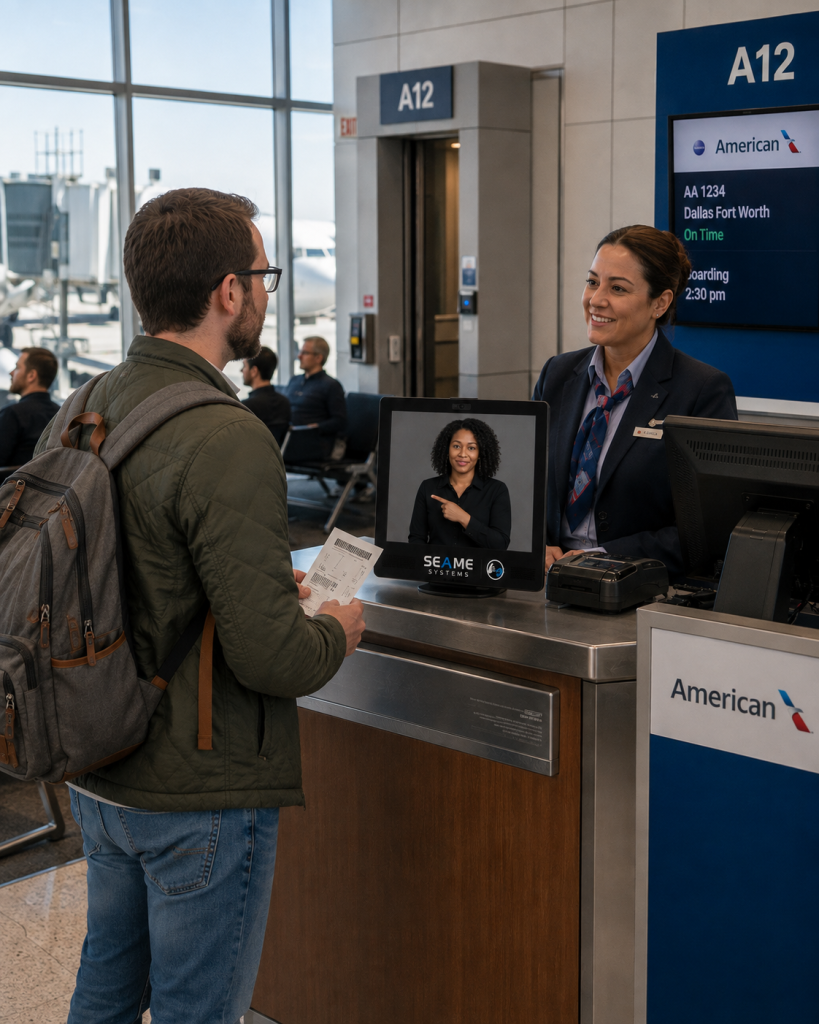
Gate and Boarding Assistance
Gate agents may need to communicate directly with passengers about:
- Boarding
- Seat changes
- Flight delays
- Aircraft changes
- Connections
- Special assistance
- Baggage issues
- Rebooking
VRI can help ensure that important information is communicated clearly rather than relying solely on written notes or gestures.
Flight Delays and Cancellations
Disruptions are particularly challenging because passengers may need to make rapid decisions about rebooking, transportation, hotels, meals, and connecting flights.
A DHH traveler who cannot easily communicate with airline personnel may face additional delays and frustration during an already stressful situation.
Emergency Situations
Airports must be prepared to communicate during emergencies, evacuations, severe weather, security incidents, medical emergencies, and other unexpected events.
Auditory announcements alone may not provide adequate access for every passenger.
VRI provides airport and airline employees with an additional communication tool for directly communicating critical information to DHH travelers when circumstances require it.

How VRI Can Be Incorporated Into Airports
VRI can be deployed at strategic passenger-service locations throughout an airport.
Potential locations include:
- Airline ticket counters
- Check-in areas
- Customer-service desks
- Information counters
- Security-support areas
- Boarding gates
- Baggage claim
- Passenger-assistance areas
- Airport information centers
- VIP and premium passenger services
- Conference and meeting facilities
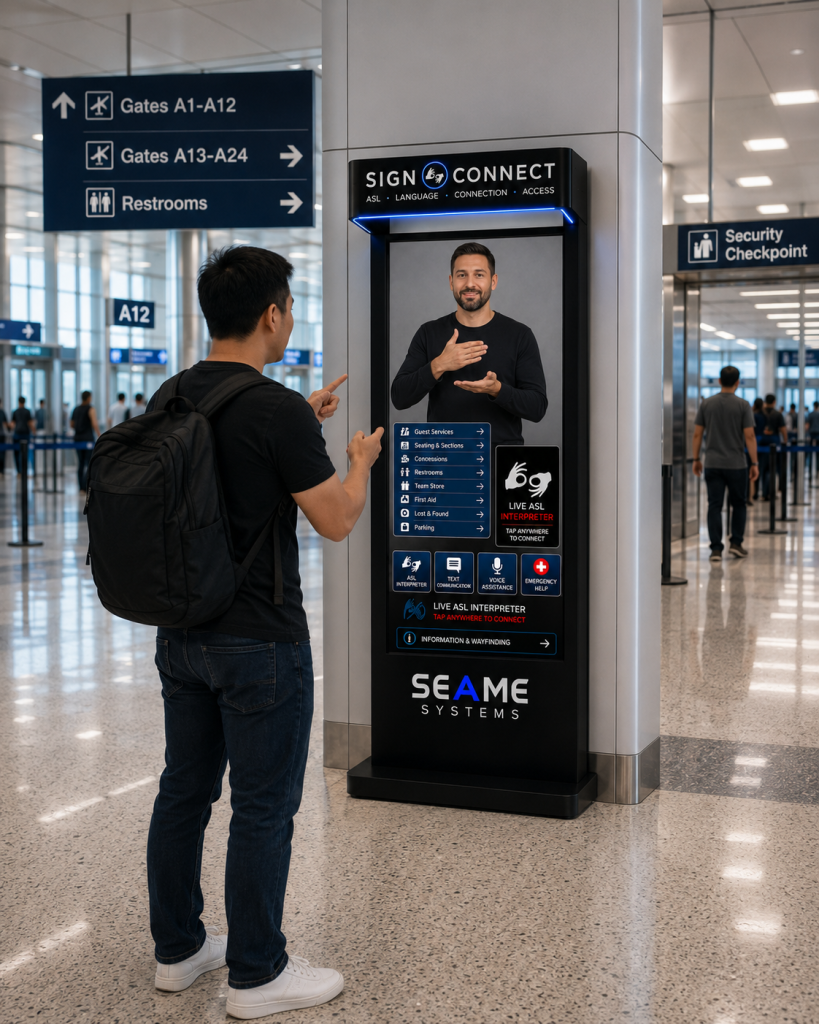
A dedicated Video Remote Interpreter kiosk can provide a highly visible accessibility resource that passengers and employees can access when communication assistance is required.
Benefits to Airports & Airlines
Improved Passenger Experience
Effective communication can reduce confusion and allow DHH passengers to navigate the airport with greater confidence and independence.
The result can be a more positive overall travel experience.
Faster Customer-Service Resolution
VRI can help employees communicate more effectively with passengers when complex issues arise.
Instead of relying on handwritten notes, gestures, or repeatedly exchanging information, employees can connect with an interpreter and address the issue more efficiently.
Increased Passenger Confidence
Knowing that accessible communication is available can influence a passenger’s willingness to select an airport, airline, or destination.
Accessibility becomes part of the overall customer-service experience.
Greater Customer Loyalty
A passenger who experiences excellent service is more likely to consider the same airline for future travel.
For airlines, this creates an opportunity to build relationships with DHH travelers rather than treating accessibility as a one-time accommodation.
Expanded Market Opportunity
The DHH community represents a significant travel market. DHH travelers also frequently travel with spouses, family members, friends, caregivers, business associates, and travel groups.
Consequently, making travel more accessible can potentially influence purchasing decisions beyond a single passenger.
Potential Benefits to Airline Revenue
1. Increased Ticket Sales
When passengers have confidence that an airline can provide accessible communication throughout their journey, accessibility can become a factor in airline selection.
A positive accessibility reputation can help attract DHH travelers who may otherwise favor airlines known for providing better communication access.
2. Repeat Business
An accessible and respectful travel experience can encourage passengers to return.
For airlines, repeat customers have significant long-term value because customer acquisition is only one part of the revenue equation. Retaining passengers and encouraging future bookings can strengthen the value of each customer relationship
3. Group and Family Travel
DHH travelers rarely travel in isolation from the broader travel economy.
A passenger may travel with:
- Family
- Friends
- Business colleagues
- Schools
- Community organizations
- Conferences
- Tour groups
Providing accessible service can therefore help influence larger travel purchases.
4. Premium Services and Ancillary Revenue
An improved passenger experience can also support greater engagement with airline and airport services, including:
- Premium seating
- Lounge access
- Baggage services
- Food and beverage
- Priority services
- Travel upgrades
- Hotel partnerships
- Ground transportation
Accessibility can therefore contribute indirectly to the overall value of a passenger relationship.
5. Corporate and Organizational Travel
Companies and organizations may have employees, customers, or participants who are deaf or hard of hearing.
Airlines that demonstrate strong accessibility practices can become more attractive to organizations that prioritize inclusive travel and employee accessibility.
VRI as a Competitive Advantage
Airlines compete on more than ticket price.
Passengers increasingly evaluate an airline based on the complete travel experience—from booking through arrival.
Providing visible access to VRI can help differentiate an airline by demonstrating that communication accessibility is incorporated into its customer-service model.
Instead of asking a DHH passenger to overcome communication barriers, the airline can provide the technology needed to overcome those barriers.
Benefits to Airport Operations
VRI can also benefit airport operations by providing airport employees with a consistent communication resource.
Potential operational benefits include:
- More efficient passenger assistance
- Reduced communication misunderstandings
- Improved customer-service interactions
- Greater employee confidence
- More effective emergency communication
- Increased passenger independence
- Consistent accessibility across multiple service points
VRI can supplement, rather than replace, other accessibility services and qualified in-person interpreting when those services are appropriate.
Recommended Airport Implementation
A successful VRI program should be incorporated into the airport’s broader accessibility strategy.
Recommended approach:
- Identify high-communication locations
Determine where DHH passengers most frequently interact with airport and airline employees.
- Deploy VRI kiosks strategically
Place systems in highly visible areas such as ticket counters, customer-service centers, and boarding gates.
- Train employees
Front-line employees should understand when and how to activate VRI services.
- Integrate VRI into emergency procedures
Employees should understand how the technology can support communication during disruptions and emergencies.
- Promote accessibility
Airlines and airports should clearly communicate the availability of VRI through websites, mobile applications, reservation systems, signage, and passenger communications.
- Measure results
Track utilization, passenger feedback, service-resolution times, and customer satisfaction to evaluate the program’s impact.
Conclusion
Video Remote Interpreting can help transform the airport experience for deaf and hard-of-hearing travelers by providing immediate, on-demand communication support at critical points throughout the passenger journey.
For airports and airlines, VRI is more than a technology solution. It can become part of a comprehensive strategy for accessible customer service, operational efficiency, passenger satisfaction, brand differentiation, and market growth.
By making communication accessible from check-in to boarding, during disruptions, and through arrival, airports and airlines can create a more welcoming travel experience while positioning themselves to capture additional business from DHH travelers and the families, organizations, and groups who travel with them.
Accessible communication is not simply about helping passengers get through the airport—it is about creating an experience that makes passengers want to choose the airline again.
The Business Case for Airport & Airline Accessibility
The value of VRI extends beyond simply providing an accessibility service.
For airports and airlines, the investment can support three important objectives:
ACCESSIBILITY → BETTER EXPERIENCE → CUSTOMER LOYALTY → REVENUE OPPORTUNITY
When DHH travelers can communicate effectively, they can navigate the airport more independently, resolve problems more efficiently, and have greater confidence in the airline.
That experience can translate into repeat bookings, referrals, family and group travel, stronger customer relationships, and greater access to an underserved travel market.
Get Started
Ready to remove navigation barriers for deaf and hard of hearing guests? SeaMe Systems Sign Connect kiosks helps hotel and hospitality venues design accessible wayfinding solutions that improve guest experience and independence.
Click the button below to get started.